Understanding the different types of pollution: a crucial issue for our soils and our health
|
|
Time to read 5 min

|
|
Time to read 5 min
Summary
The word pollution often brings to mind air or water. Yet, the soil—this living medium that nourishes our plants, filters water, and shelters billions of organisms—is also threatened. Understanding each type of pollution helps us grasp the risks to the environment, health, and agriculture.
At Pouryère , we support individuals, farmers, and communities in analyzing and understanding soil quality. Through reliable sampling methods and clear reports, we identify the type of pollution present, its causes, and concrete solutions to address it.
This article guides you through the major types of soil pollution , their origins, their impacts, and the best practices for diagnosing and treating them.


The term pollution type refers to the nature of the pollutant and its mode of action on the environment.
Three main categories are generally distinguished:
Each type of soil reacts differently, persists for varying lengths of time, and requires tailored solutions. Pouryère leverages these distinctions to offer a comprehensive and precise soil analysis.
Chemical pollution is the most widespread type of pollution . It comes from the introduction of toxic substances:
These substances do not break down easily. They can migrate back to plants, contaminate water, or accumulate in food chains.
This form of pollution alters the natural structure of the soil without necessarily introducing chemicals.
It can be found in the form of:
This type of pollution alters the biological functioning of the soil: water circulates less, roots breathe poorly, and earthworms disappear.
Here, the contamination comes from microorganisms or pathogens.
Examples:
This type of pollution can threaten food safety, particularly for vegetable gardens or livestock farming areas.
We also distinguish:
Each type of pollution requires a specific analysis protocol. At Pouryère, we adapt our sampling and testing to the on-site situation to guarantee reliable interpretation.
| Type of pollution | Main origin | Effects on the ground | Health/environmental risks | Solutions offered by Pouryère |
|---|---|---|---|---|
| Chemical | Industry, fuels, fertilizers, paints | Depletion, toxicity, nutrient blockage | Food contamination, chronic diseases | Complete chemical analysis, pollution control, natural soil amendments |
| Physical | Waste, backfill, microplastics, compaction | Suffocated soil, loss of structure | Erosion, decreased productivity | Visual diagnosis + structural testing, rehabilitation, structural composting |
| Biological | Wastewater, contaminated compost, pathogens | Biological imbalance, plant diseases | Health risks, loss of biodiversity | Microbiological analysis, biological treatment, soil life improvement |
| Diffuse | Air pollution, agriculture, transport | Slow, invisible contamination | Difficulty in detection, propagation | Multipoint sampling, long-term monitoring |
| Punctual | Industrial accident, leak, landfill | Local concentration of pollutants | Immediate or localized danger | Mapping, targeted remediation, site containment |
Each type of pollution has its dominant causes:
💬 Did you know?
A single fuel spill can contaminate several cubic meters of soil. That's why Pouryère recommends always carrying out a soil analysis before developing a plot of land or creating a vegetable garden.
Pouryère offers easy-to-use sampling kits that comply with laboratory protocols.
The samples are then analyzed to identify:
Each analysis clearly indicates the type of pollution involved and provides appropriate recommendations.
Soil sampling must comply with certain rules to avoid cross-contamination.
At Pouryère:
This rigorous protocol guarantees a reliable reading of the type of pollution present in your soil.
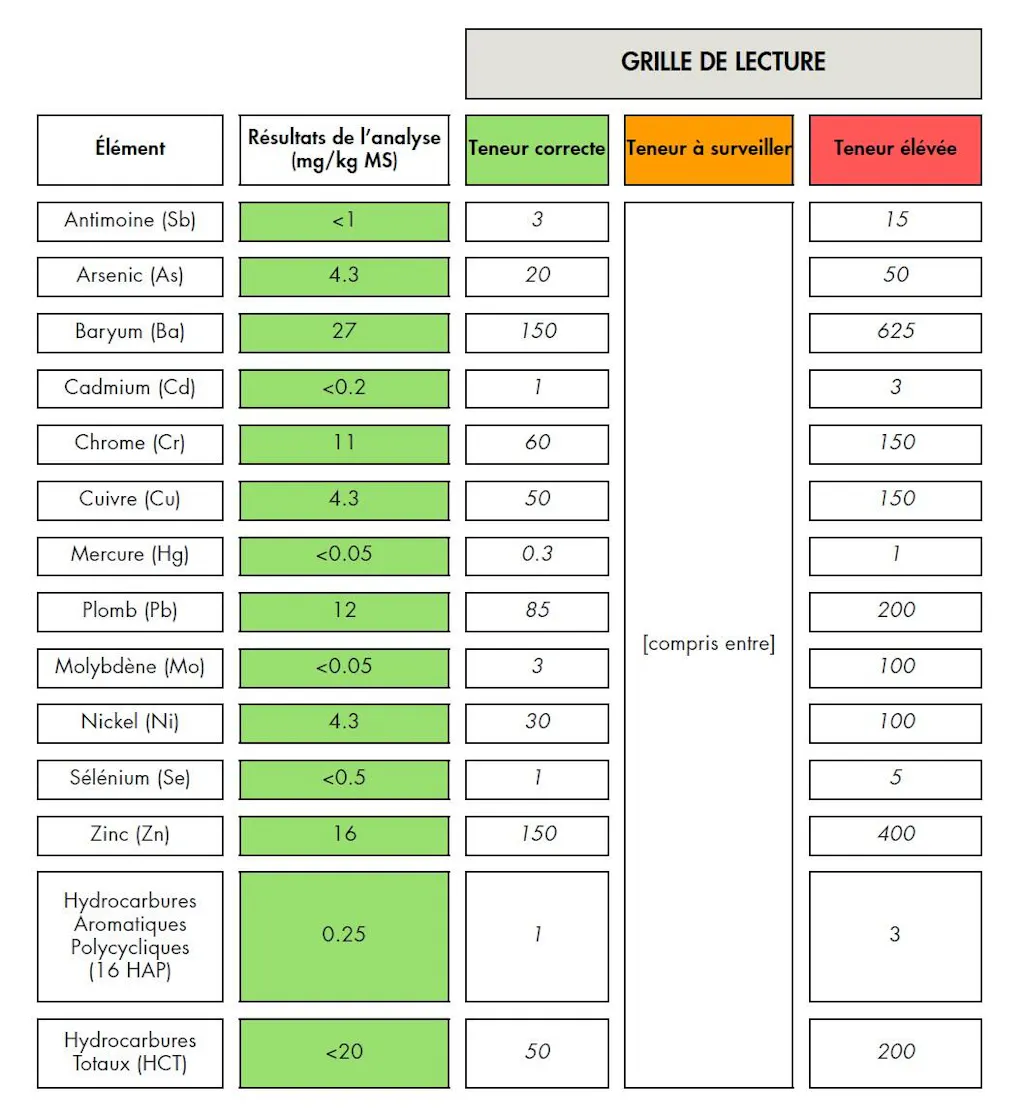
The Pouryère analysis report presents the results in a clear and understandable way:
This educational approach makes diagnosis accessible to everyone — individuals as well as professionals.
By choosing Pouryère , you transform a simple concern into useful knowledge and concrete action .
Healthy soil is the foundation of a sustainable environment. Together, let's identify the type of pollution and revitalize your land.
Soil pollution types are numerous and sometimes invisible. Yet, their effects can last for decades.
Thanks to a professional soil analysis , it is possible to identify the nature of the problem, to act locally and to sustainably improve the health of your soil.
By collaborating with Pouryère , you benefit from:
Test, understand, restore: three essential steps to bring your floors back to life.
Related product
POLLUKIT: Soil Pollutant Analysis
199,00€